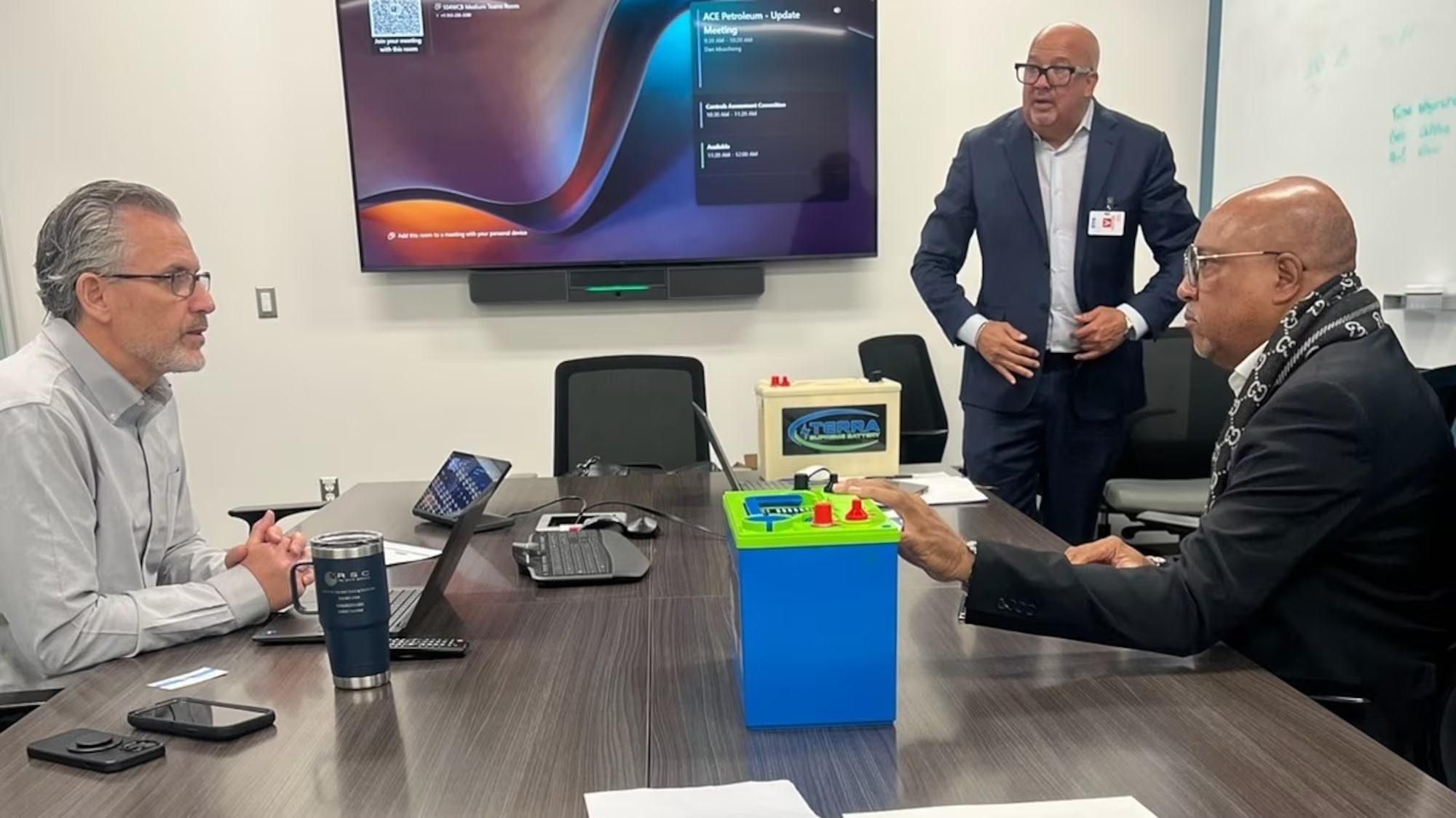
Business partners Moses Shepherd (right) and Chris Jordan (middle) pitch Dan Muschong, supplier program manager at DTE Energy, on the Terra Supreme battery. (courtesy)
Two entrepreneurs in Detroit are hoping to bring a unique lead-acid battery technolog into the mainstream with a muti-million dollar bet they hope launches their company to new heights.
SJ Power Solutions, a subsidiary of Detroit contractor Ace Petroleum Inc., is pitching its new Terra Supreme battery to the city as a money-saver for its fleet vehicles and to other organizations ranging from DTE Energy Co. to Oshkosh Defense.
SJ Power Solutions has a stake in a $40 million factory in Indiana tooled up and ready to crank out the high-performing batteries.
First, it needs customers.
The pitch is simple: Pay more up front for superior batteries and benefit from bigger cost savings over time. Moses Shepherd, founder and CEO of Ace Petroleum, sees it as an opportunity to diversify into a multifaceted energy contractor while the demand for batteries and energy storage booms.
“We are working to establish the technology as a fleet and industrial power solution where battery failures, downtime, maintenance and replacement costs have a measurable operational impact.”
The Terra battery’s composition differs significantly from the standard lead-acid batteries found under most vehicle hoods. It has 1,200 individual fiber optic connections — 100 times more than typical — and is the strongest cranking Group 31 heavy-duty battery available, using gel instead of water. It makes for a maintenance-free battery that generates more power.
For the city of Detroit, it means a cost savings of $16.5 million, said Chris Jordan, president and co-founder of SJ Power Solutions and Shepherd’s half-brother.
While Terra batteries cost two to three times more than standard lead-acid batteries, they will last the life of a fleet vehicle (typically five years) instead of being replaced every year.
“Everybody is going to need to have this technology in order for them to have reserve power,” Shepherd said.
The technology behind the Terra battery dates back decades to NASA efforts to develop more powerful and reliable lead acid batteries. The technology was developed by Tracorp Inc. before changing hands numerous times and eventually landing with Envoy Grove LLC, which had a plant in Oklahoma.
Amid financial issues, the company sold the technology and certain assets to Terra Supreme Battery LL, which has industrialized production of the batteries at a plant in Indiana. SJ Power Solutions, a joint venture between Shepherd and Jordan, owns a minority share of Terra Supreme and functions as its commercial arm.
“Our respective strengths complement one another. Terra brings the engineering, manufacturing capability and battery technology. SJ brings market development, customer relationships, commercial strategy, fleet applications and access to customers that operate mission-critical equipment.”
The company has been engaged with the city of Detroit in pilot programs since November. One success it highlights is a city-owned Ford F-750 Super Duty truck equipped with a boom, lift and auxiliary equipment that had been out of use for months. After installing the Terra battery, the $600,000 truck was back up and running, according to the company.
“Getting a vehicle of that value back into operation is about considerably more than the cost of a battery,” Shepherd said. “When a specialized work truck is out of service, the municipality potentially loses the productivity of the vehicle, its specialized equipment and the crew assigned to operate it.”
Terra Supreme’s plant in Indiana has capacity to make 150,000 batteries initially. The company must first secure firm off-take agreements before it scales production.
Around 1,000 batteries have been produced to date, with 500 deployed in field trials.
“The immediate strategy is qualification, field testing, fleet demonstrations and commercial adoption,” the company said in a statement. “As those programs convert into purchase commitments and larger-volume agreements, production can be increased accordingly.”